(Japanese Cookbook. All these Japanese recipes in English for free.)
by Honest Japanese Cooking
This website looks like it's from 1990's.
However, as I edit this page, my calendar shows it's May of 2020.
Please accept my apologies that my computer skills suck.
Thank you.
First, you must understand SOY SAUCE and MIRIN.
*These two ingredients are OFTEN used in Japanese cooking.
Soy sauce(shouyu) is a salty liquid(fermented soy and wheat usually, with salt water).
The benefit of using soy sauce: adds saltiness plus UMAMI(yummy taste).
This leads to simple yet tasty cooking.
Soy sauce is not just some BROWN SALT WATER.
*It masks unwanted smells of meat, fish, root, etc;
this explains why Japanese cooking does not require much spices and herbs.
Mirin is an alcoholic rice syrup. Mirin adds mild sweetness.
True mirin(hon-mirin) contains about 12-14% alcohol.
Sweetness of mirin is milder than sugar, but is complex.
Similar to the usage of honey or maple syrup.
Mirin is no just some SUGAR WATER.
*Udon soup, Soba dip, tempura dip, ponzu, teriyaki sauce, all contain mirin.
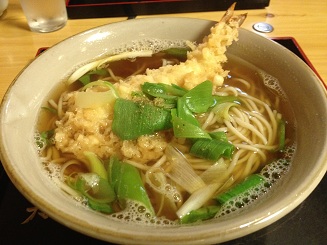
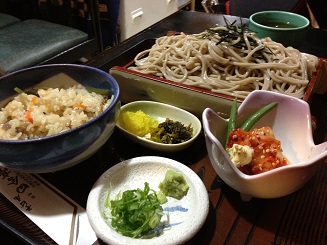
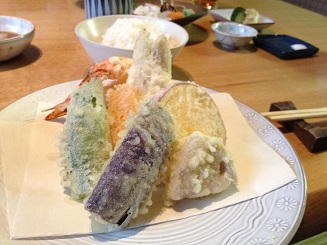
examples of dishes containing mirin
Next, please understand the importance of DASHI and MISO.
Dashi is made from dried fish and seaweed. It is in liquid form and works as the base for
different types of soups and sauces in Japanese cooking. Using mirin and soy sauce make food
tastier, but also saltier and sweeter. Dashi is adding depth, like using onion or garlic.
Miso is like soy sauce. However, it is in paste form and often made from rice and soy.
Now, you have the basics covered. You are MUCH MORE informed about Japanese cooking
than many young Japanese people who don't cook often.
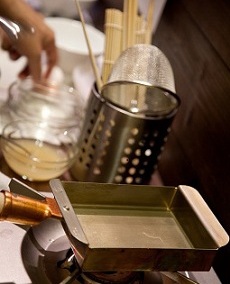
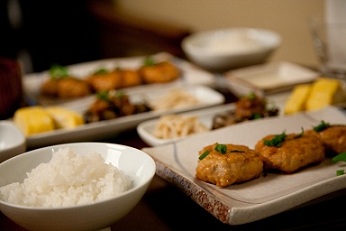
Japanese Recipes:
I already have cooking videos, but let me sort this out. Please give me time.

Katsudon, oyakodon, tempura sauce, gyoza, ponzu sauce, sushi, curry udon, kakuni, fried rice, etc.